
This post may contain affiliate links. View the disclosure for more information.
Is Botswana safe for tourists? You might be wondering. This is an in-depth article about the safety of tourists in Botswana.
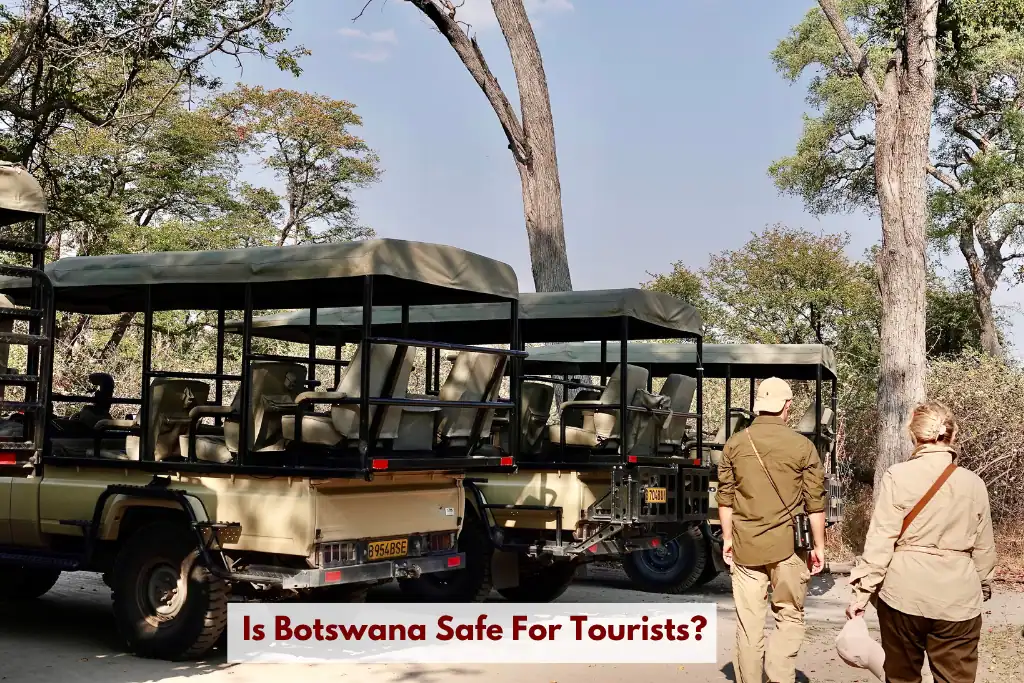
Planning to visit a country as a tourist for the first time can be exciting and unnerving. If you’re anything like me, you’re doing all the research you can to ensure you’re visiting a safe country.
As someone who was born and raised in Botswana, I am giving you the best overview and tips about Botswana safety in regard to tourists.
There are several questions I’ve heard regarding the safety of tourists in Botswana. People often ask, ‘Is Botswana safe for tourists?’ Is Botswana safe for white tourists? Is Botswana safe for solo female travellers? ‘Is Botswana safe?. This post will address these questions and more.
After reading this post, you will have all the information you need to assess Botswana safety for yourself and make an informed decision to visit with confidence.
This post addresses the key question: Is Botswana safe for tourists?
Is Botswana Safe for Tourists?
1. Is Botswana safe for white tourists?
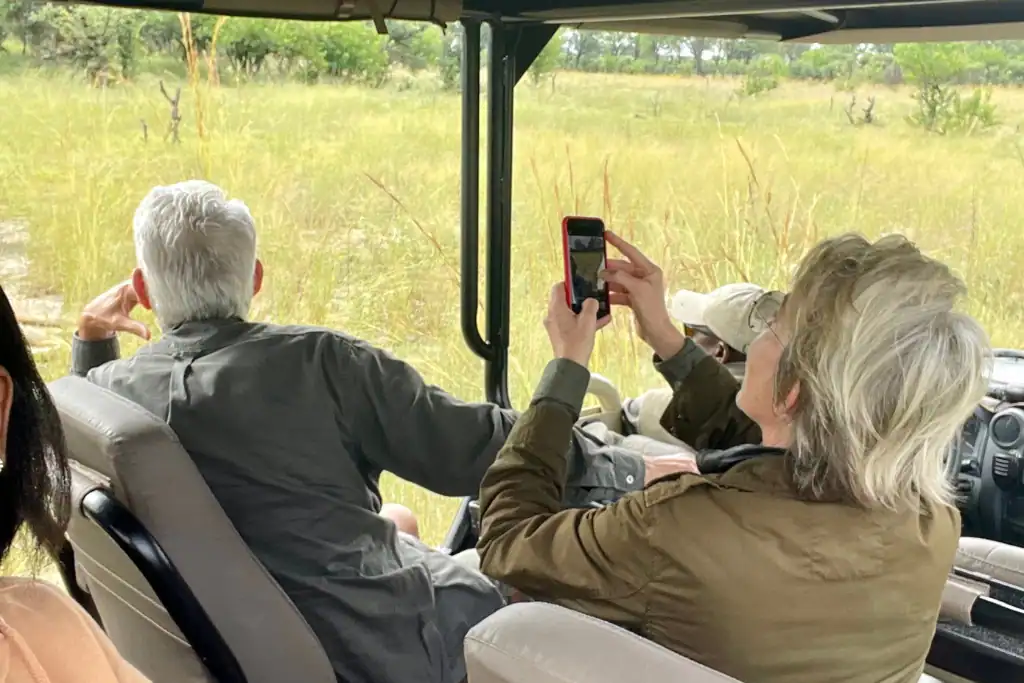
Dreaming of visiting Botswana for a safari? Is the little voice whispering, ‘Is Botswana safe?’ Short answer, yes!
Botswana is safe for white tourists. Botswana isn’t just safe; people are warm and welcoming to visitors. The country receives a large number of tourists each year, mainly safari enthusiasts.
The top visiting countries are the United States, Germany, Canada, and the United Kingdom. Race-related crime or discrimination is not a thing in Botswana.
That being said, ‘safe’ does not necessarily mean incident-free, like anywhere in the world.
In general, there are incidents of petty crime, such as pickpocketing and mobile phone theft, especially in crowded public places, which is a general problem and not targeted at tourists.
When touring cities and towns, be mindful of your surroundings and keep your belongings safe.
If you are visiting for a safari, petty crime is extremely unlikely, as Botswana safaris are generally very remote and the staff are trustworthy.
2. Is Botswana safe for solo female travellers
Is it safe to travel to Botswana, especially as a solo female traveller? The answer is yes! As a solo female traveller who travels Botswana, my answer is yes.
Botswana is generally safe for solo female travellers. If you are travelling to Botswana for a safari, it is absolutely safe.
As I mentioned, Botswana safaris are incredibly remote, so there will be no risk of pickpocketing in crowds. It will be just you, the staff, and a few other tourists.
However, please make sure that you book with reputable companies, such as Safari.com or Go2Africa.
However, if you are visiting different places, such as Gaborone, Francistown, and Maun, you may receive unwanted attention, especially in bars. I suggest limiting alcohol intake when in cities. Never walk alone at night, and share your itinerary with someone.
I understand how daunting this can be, so if you are travelling from Gaborone to the Okavango Delta, take the flight to Maun instead of driving.
3. Is Botswana safe for American tourists
Yes! Botswana is safe for American tourists. In fact, among Western countries, Botswana receives the most tourists from the USA.
The USA consistently leads the pack year after year in visitor numbers, followed by Germany and the United Kingdom.
Visitors often have a fantastic time in Botswana, leave good reviews, and return.
They have an excellent relationship with tour operators and safari lodges. One of the tour operators once told me that there is a couple from the US who visit every single year without fail.
If you are visiting from the US, visit US Travel State Gov for the latest updates and Botswana travel warnings.
On the other hand, if you are planning to visit from the UK, GOV.UK website will be great for checking the latest updates.
4. Is Botswana safe for female tourists
Botswana is generally safe for female travellers. Botswana is considered one of the safest countries in Africa.
If you plan to visit Botswana as a female tourist, you will likely find the experience empowering, peaceful, and adventurous.
The locals are generally friendly and respectful towards women.
Catcalling is rare but not unheard of. Most people who had visited Botswana reported feeling safe, respected, and supported, and, above all, having had a fantastic time.
5. Is Botswana safari safe
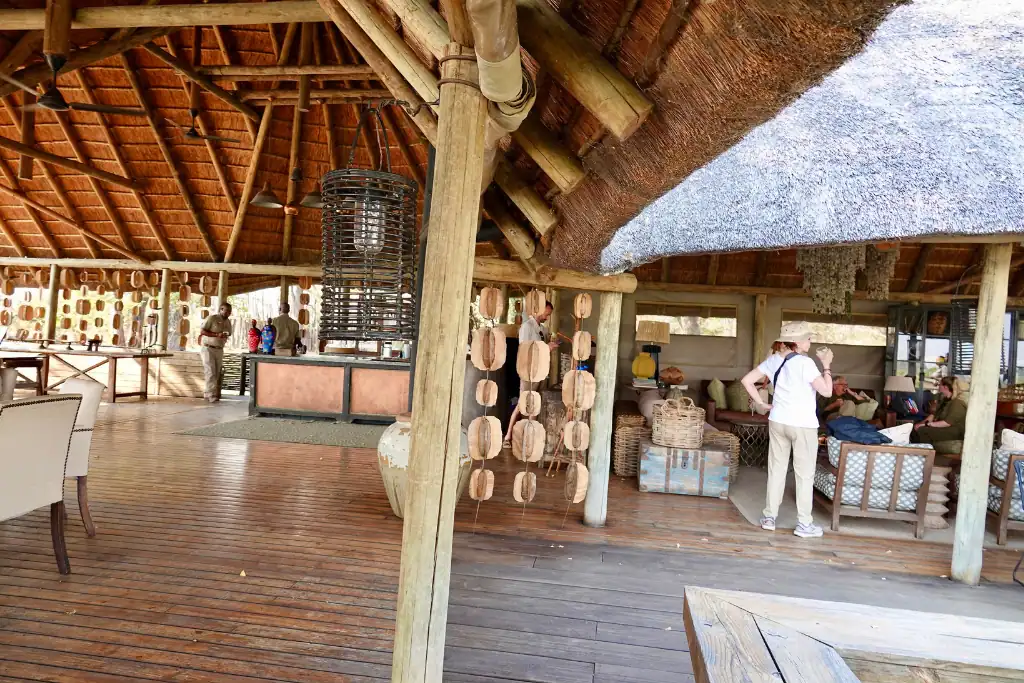
Yes! Botswana is one of the safest safari destinations in Africa, with excellent safari reviews. Additionally, Botswana is a stable and peaceful country.
Safari safety incidents in Botswana are exceptionally rare. However, as in any part of the world, certain precautions are necessary when on safari.
Safety starts before you even go out for a game drive. When around camp, you will be escorted to and from your lodge or camp room. This is because animals can wander into camp.
If you are going on a safari in Botswana, you will be under the care and guidance of the best safari guides and tour operators.
These individuals are not just drivers; they are wildlife experts, thoroughly trained in safari safety, animal behaviour, and first aid.
Above all, they are experienced; they live and breathe the Botswana bush. They have a wealth of knowledge about the wild.
Safari safety tips
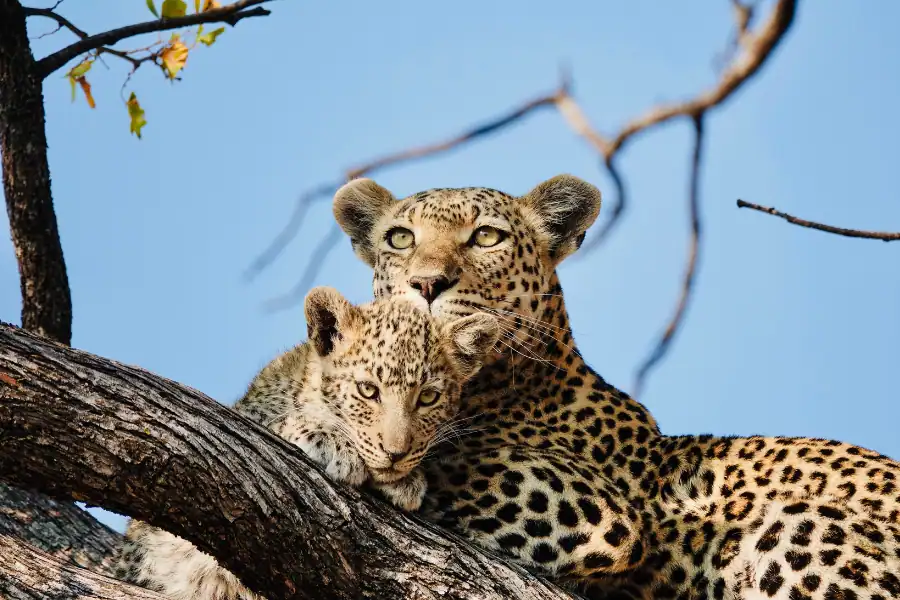
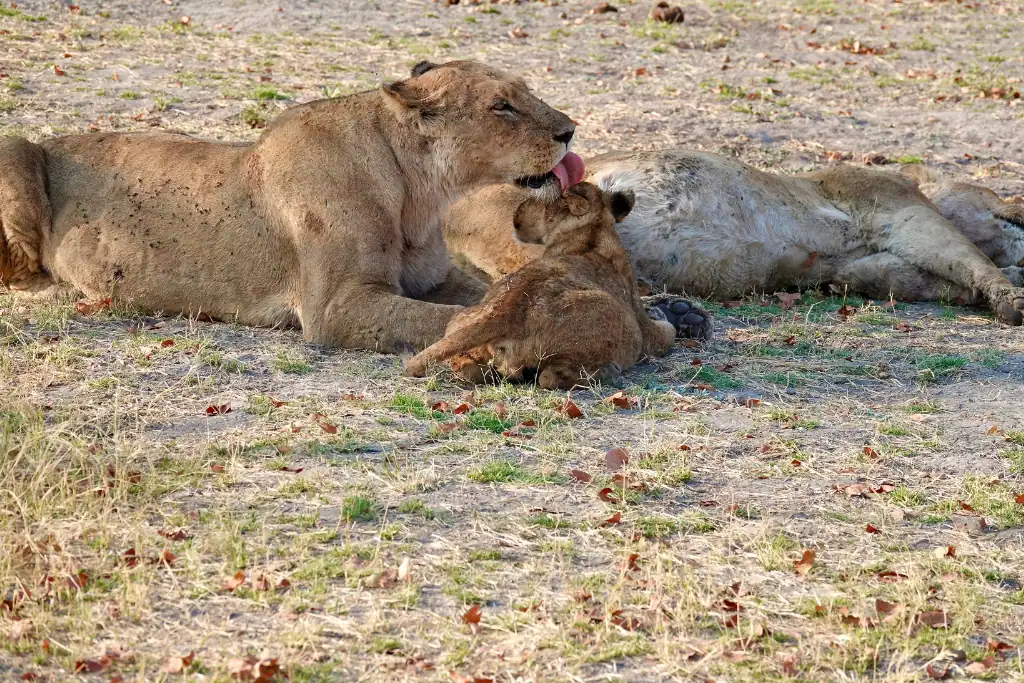 Lioness grooming her cub, Khwai Private Reserve, Botswana
Botswana safari tips help you prepare in advance, but once you are there, I suggest you listen to your guide. Your safari guides and tour operators will always provide a safety briefing before you embark on your safari.
When on a safari, remember that you are in the natural habitat of wild animals. They are wild by nature and can be unpredictable, so it’s imperative to follow your safari guide’s instructions.
Here are the safari safety tips you must adhere to
1. Always stay in the vehicle
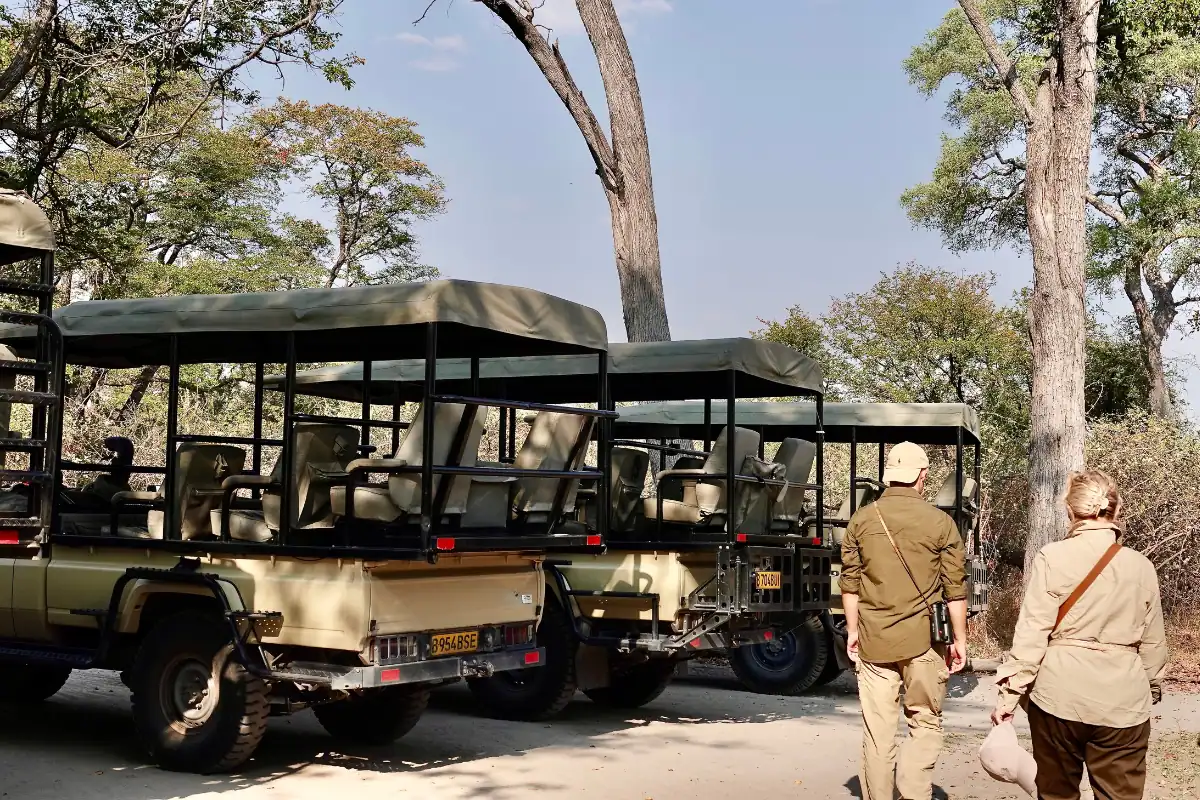
This is likely the first thing your safari guide will mention. While inside the safari vehicle, please don’t extend your arms or legs, be mindful of this when taking pictures.
Again, please do not exit the vehicle unless your safari guide instructs you to do so. They know which areas are safe for guests to exit the vehicle.
I once asked the safari guide why animals don’t attack people on an open safari vehicle. He explained that when animals look at a safari vehicle, they don’t see people; they see a harmless, large box or shape.
In addition, they are used to seeing this “harmless large box”. As long as you stay inside the vehicle, you are not perceived as an individual, but rather as a non-threatening shape.
2. Do not make loud noises
As excited as you may be, please remember to keep the noise level to the absolute minimum. Whispering during a safari is the norm.
This is because loud noises can scare some animals away; however, others can feel threatened and become defensive, endangering everyone.
3. No sudden movements-
A few years ago, I was on a safari game drive with a few other people. As we were driving, one of the guests saw a lion for the first time, and, out of excitement, she sprang up, pointing at the lion. The safari guide was not happy at all.
He explained that it was dangerous to do so because, to a lion, that sudden movement was a threat, and she stood up, breaking the illusion. So, remain calm and seated.
4. Do not attempt to touch the animals
Duh! Sometimes, safari vehicles can get so close to the animals that some animals will jump on top of them. If that happens, and the animal is within reach, do not touch it; in fact, you’d better freeze.
There are a few other uncommon safety tips I have heard from safari guides that relate to animal behaviour and traits. For example:
Elephants
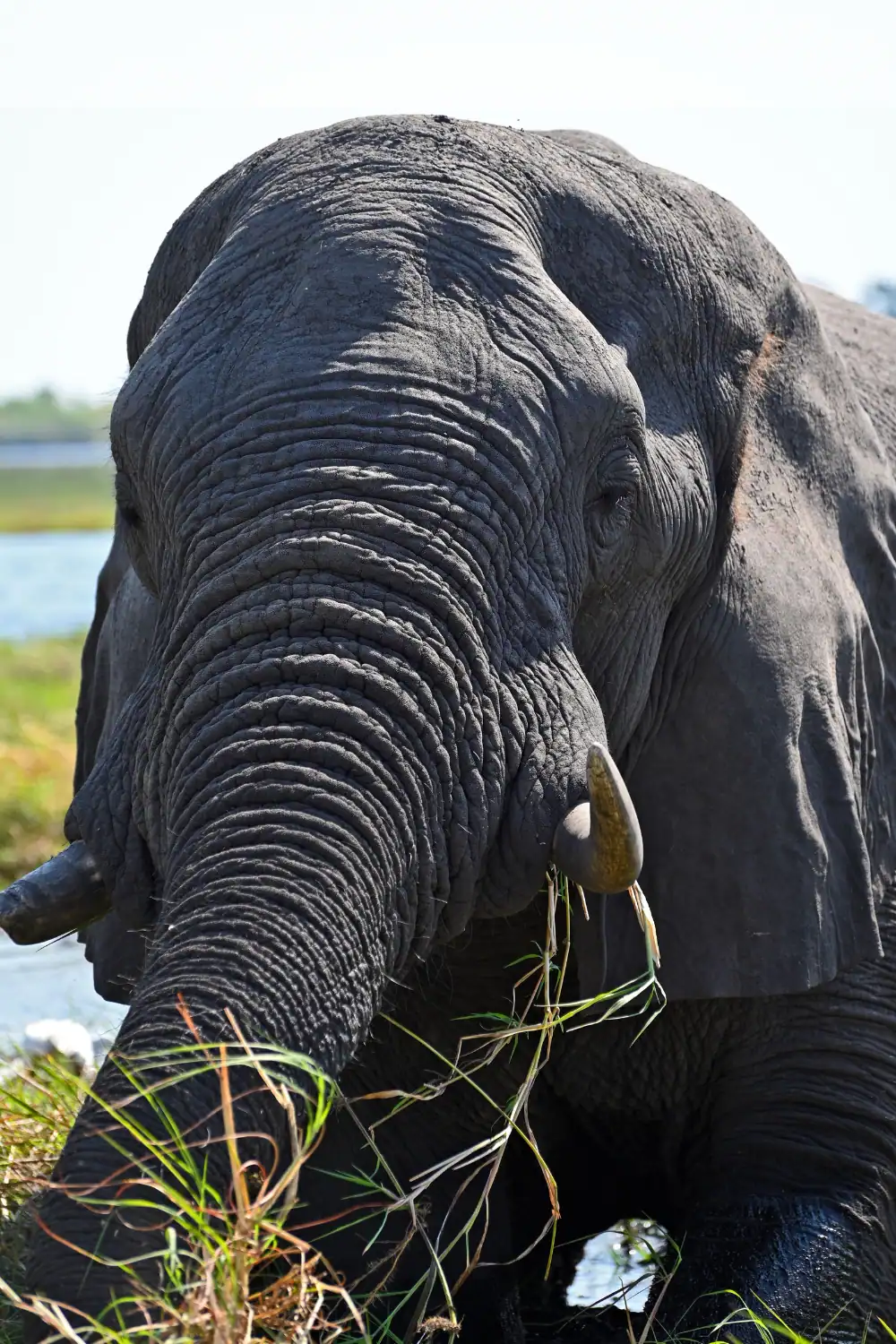
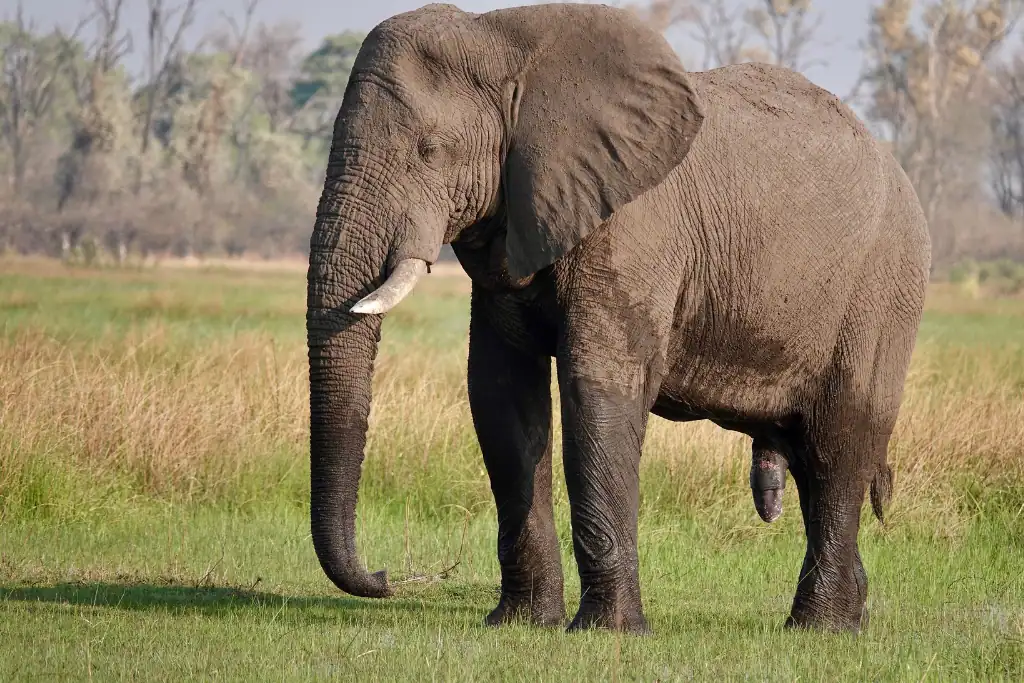 A young male elephant in the Okavango Delta, Botswana
Elephants are very intelligent and masters of body language. According to my safari guide, they will usually warn you if they don’t like how close you are to them.
If you see their ears spreading and flapping rapidly, they are asking you to move farther away.
When the elephant starts trumpeting and shaking its head side to side, it means it is becoming increasingly frustrated by your presence.
If there is trumpeting, stomping, and mock charging, that is a sign of danger. You’d better back away if you didn’t listen the first time.
However, be extra cautious around elephants with young calves, as they are protective of their young. They might perceive your presence as a threat to their children and attack without warning.
-
Hippos
I have learned that if you get chased by a hippo, you must run in a zig-zag as much as you can because hippos are poor at making quick turns. Hopefully, you don’t get chased by a hippo!
-
Lions
In the unlikely event that you are in a vulnerable situation with a lion, never give a lion your back. This is because the moment you turn your back, they instantly see you as prey, and they will attack.
Instead, back away slowly and calmly while maintaining eye contact or just freeze. Don’t run; running will trigger a chase, and no human can outrun a lion, not even Usain Bolt.
-
Leopards
Leopards are secretive stars of the bush; they are rare to spot on a game drive. They are incredible climbers. Expect to spend hours looking or waiting for one.
There was one safari where we spent three hours looking for one, and I only got a glimpse of its tail. So you might not see one on your trip.
As secretive and elusive as they are, they are naturally curious.
They sometimes climb onto the safari vehicle, sniff around, and can become uncomfortably close to you.
If that happens, as heart-pounding as it is, remain calm. Do not make any sudden movements. And remember that moment; you will be experiencing a once-in-a-lifetime moment, because they are rare and difficult to spot.