
This post may contain affiliate links. View the disclosure for more information.
The Okavango Delta map is the starting point for travellers planning to visit the legendary Okavango Delta.
In this article, I share everything you need to know about the Okavango Delta map to help you plan your safari in this region.
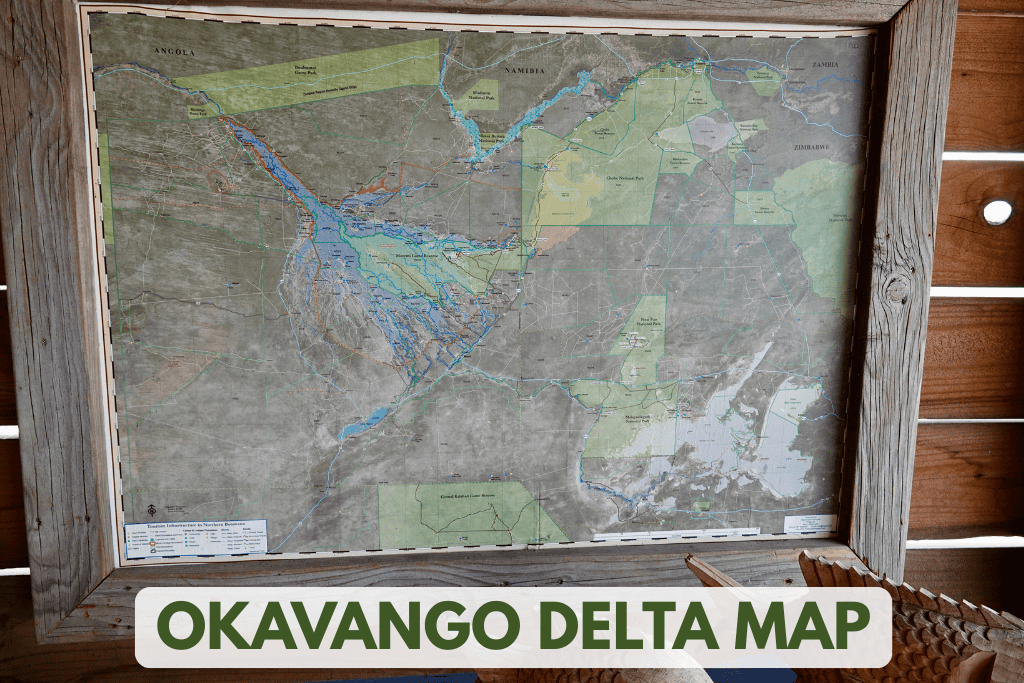
Planning the perfect safari requires thorough research, and if you are visiting the Okavango Delta for the first time, you are probably doing all the research about the region.
Moreover, if you are anything like me, with a poor sense of direction, you are likely working hard to figure out the Okavango Delta map.
In this article, you are going to learn about the Okavango Delta map, the Botswana map, and more.
After learning about this map, you will be able to plan your safari and have a wonderful time in Botswana without feeling lost.
This post is all about Okavango Delta map.
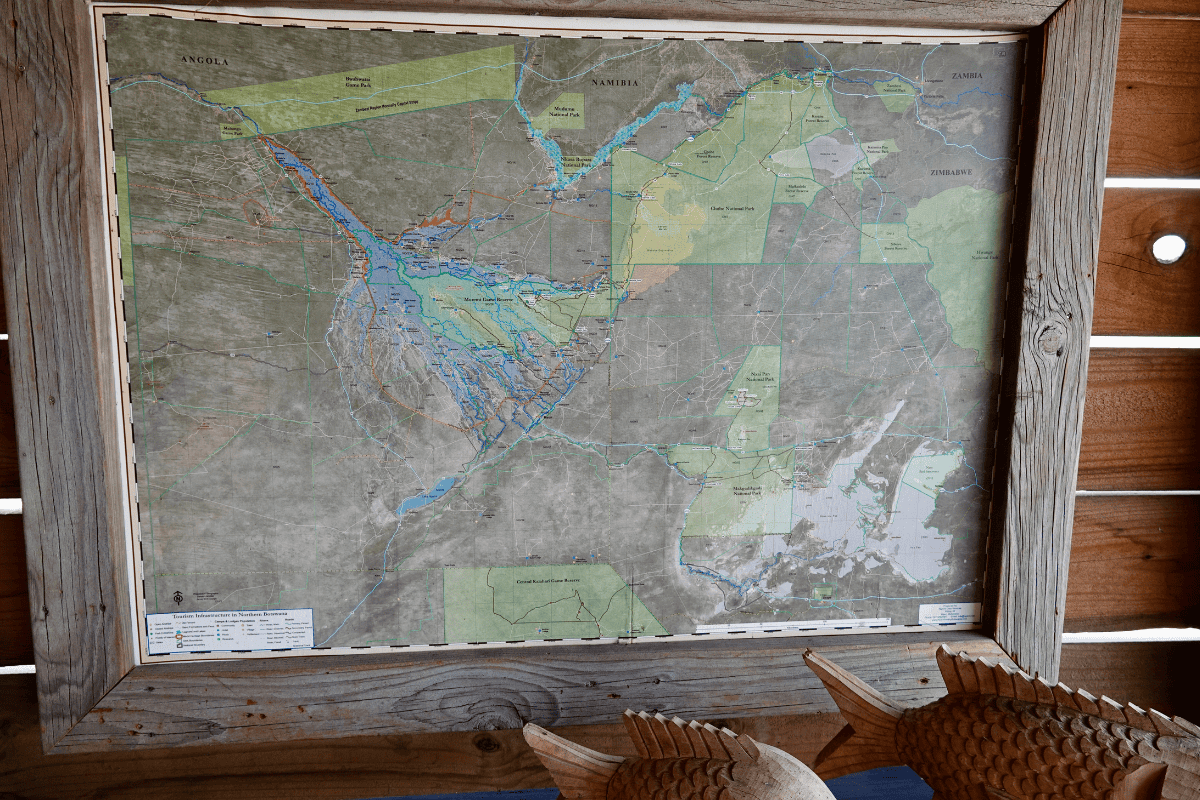
The Okavango Delta map
Where is Okavango Delta located?
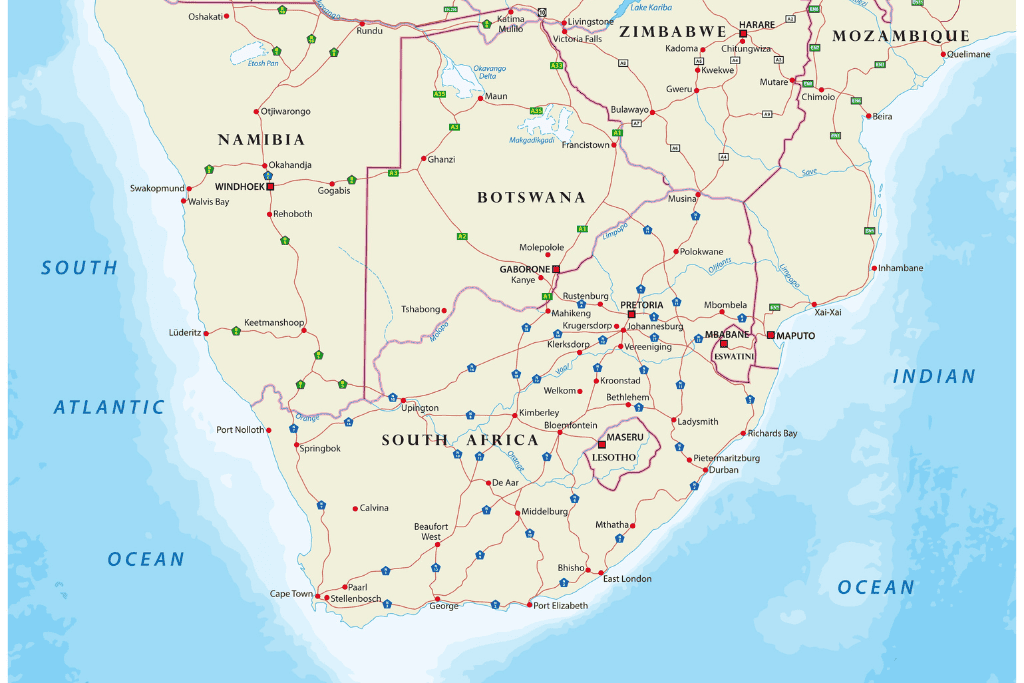
First things first, for the Okavango Map to make sense and be helpful when planning how to reach the Okavango region, we need to know where the region is in Botswana.
As you can see on the Botswana map above, the Okavango Delta is located in the northwestern part of Botswana, right on the edge of the Kalahari basin.
How to get there.
The Okavango Delta is accessible by road or flight. Depending on where you’re going, you might need to take a bush flight. Some parts are super remote and rough to get to by road.
If you are driving, the eastern part of the delta is a high-clearance vehicle only; otherwise, you will have a rough time.
This might make you wonder,’ Is the Okavango Delta safe for safari?’ The answer is: absolutely yes, this is a very safe destination.
I understand you may be visiting Africa for the first time and would appreciate detailed information on how to get there.
I have written a detailed post about how to get to Okavango Delta from different parts of the world, and you will find it extremely helpful.
Making sense of the Okavango Delta map
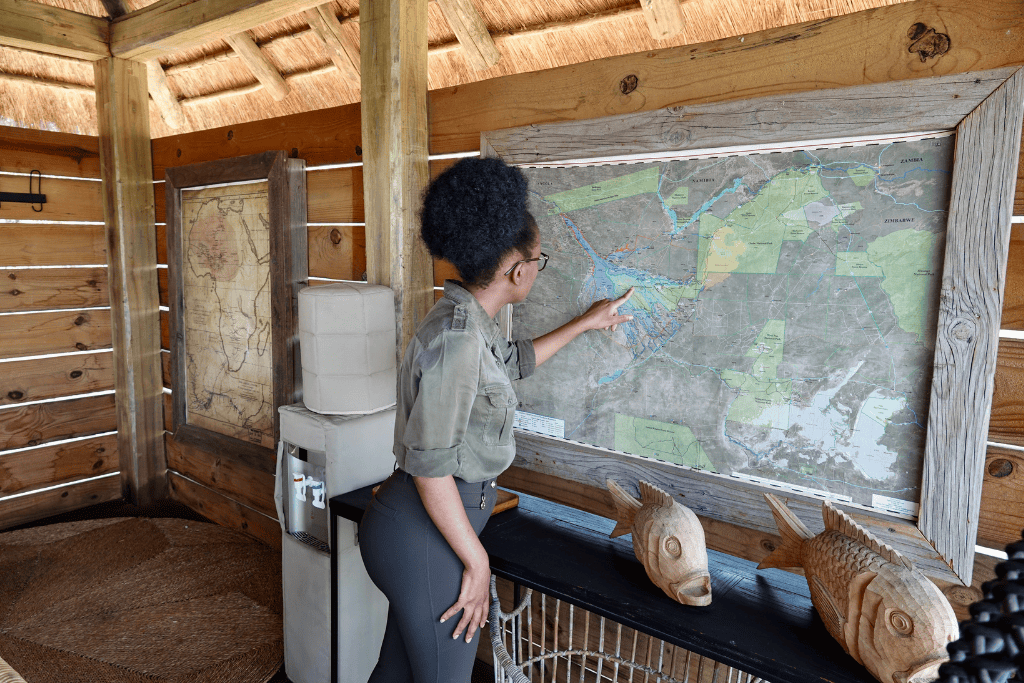
The map of Okavango Delta is fascinating, and I was completely intrigued when our safari guide taught us about the region, especially the ‘Panhandle’ bit.
Anyway, the Okavango Delta is fed by the Okavango River. The Okavango River itself is fed by the Kavango River from southeast Angola.
As the water enters Botswana, it flows hundreds of kilometres to the Okavango Delta, where it spreads across its channels.
These channels are deep and wide, with side streams, lagoons, and swamps forming the stunning Okavango Delta, a tranquil oasis.
You might be wondering, ” Why is it called the Panhandle? This is because of the map’s shape. In short, the main delta looks like a pan, and its long stretches of channels resemble a handle; hence the name ‘Panhandle’.
Why does the Okavango map change throughout the year
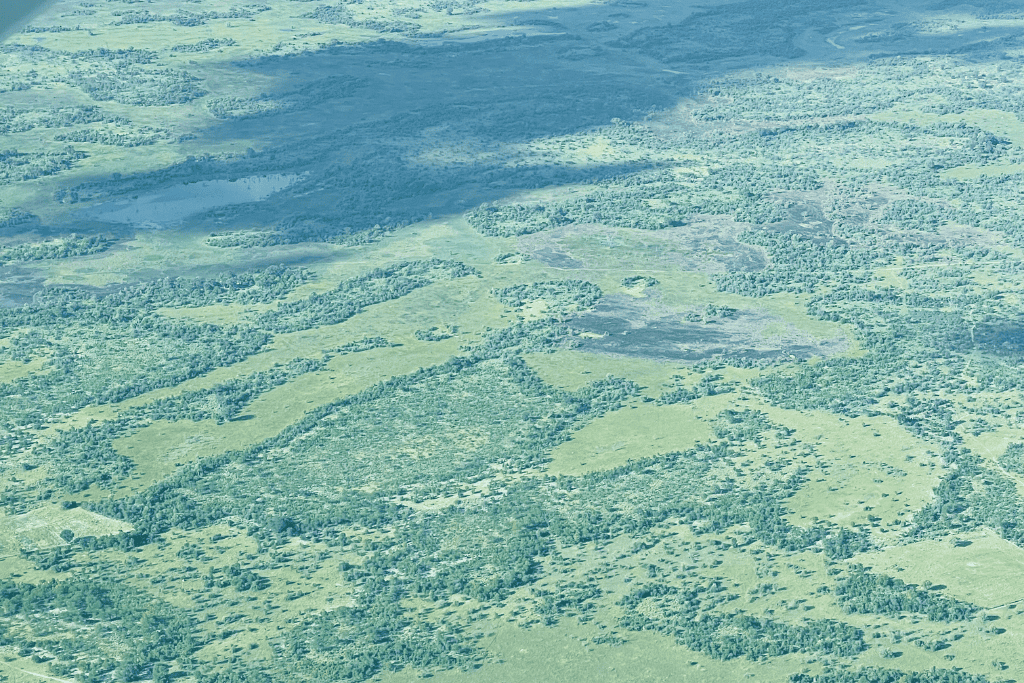
Here is the thing: no two maps are quite the same, especially when taken at different seasons of the year.
This is because the water levels dramatically affect how the map looks.
Obviously, when the delta is flooded, you will see that beautiful maze of the Okavango Delta map you often see online, the one with blue lines.
However, the absence of flood means the Okavango Delta will end up looking more like the Kalahari Desert. Dry and sandy!
What time of the year does the Okavango Delta flood? You might ask: From May to September.
Another reason why the Okavango Delta map changes is that the channels are always shifting.
Why is that? This is due to sediment: as channels get blocked, new channels form because the water has to continue to flow.
Moreover, as this water redirection is underway, some channels widen, some shrink, and some close completely. Because of this, the blue lines you see on the map keep changing. Fascinating right?
Also, vegetation plays an important role; for instance, as papyrus grows, it filters and redirects water accordingly.
If you ever wondered, ‘What is so special about Okavango Delta? Everything! The mysterious nature of the delta, together with its wildlife.
Why does this matter for a safari?
These Okavango changes might sound of little importance to you as a traveller, but they are of great importance. They affect your Okavango experience entirely.
For example, the dry season in Botswana means the Okavango Delta water levels are high. I know, I know…, this is where things get a little confusing.
Let me clarify, the Okavango Delta is not flooded by rainfall, but by Angolan floods. So the Botswana dry season has nothing to do with the Okavango Delta water levels.
That being said, you’ll have a superb safari experience during this time because the delta is at its peak, and the landscape is at its most iconic.
You will have classic water safari activities, like boat cruises and mokoro excursions.
Moreover, you will have exceptional wildlife sightings because, although the delta is flooded, the surrounding land is dry.
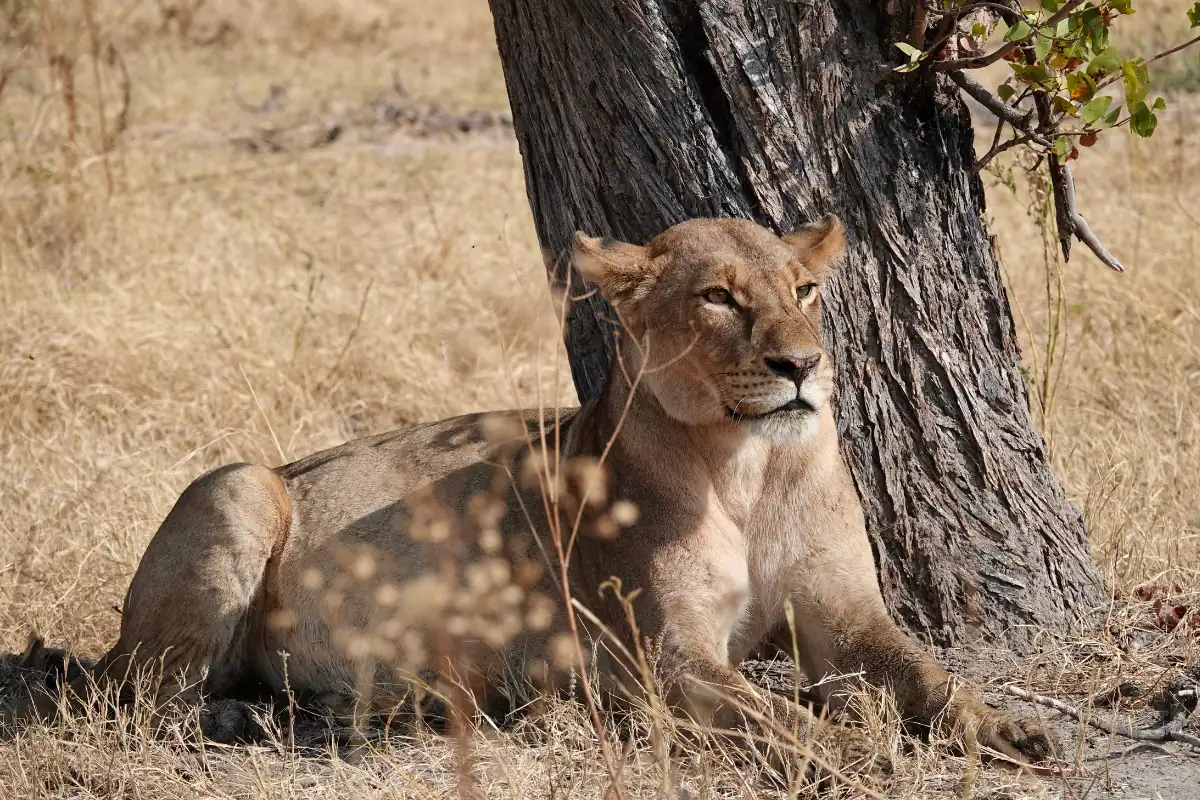
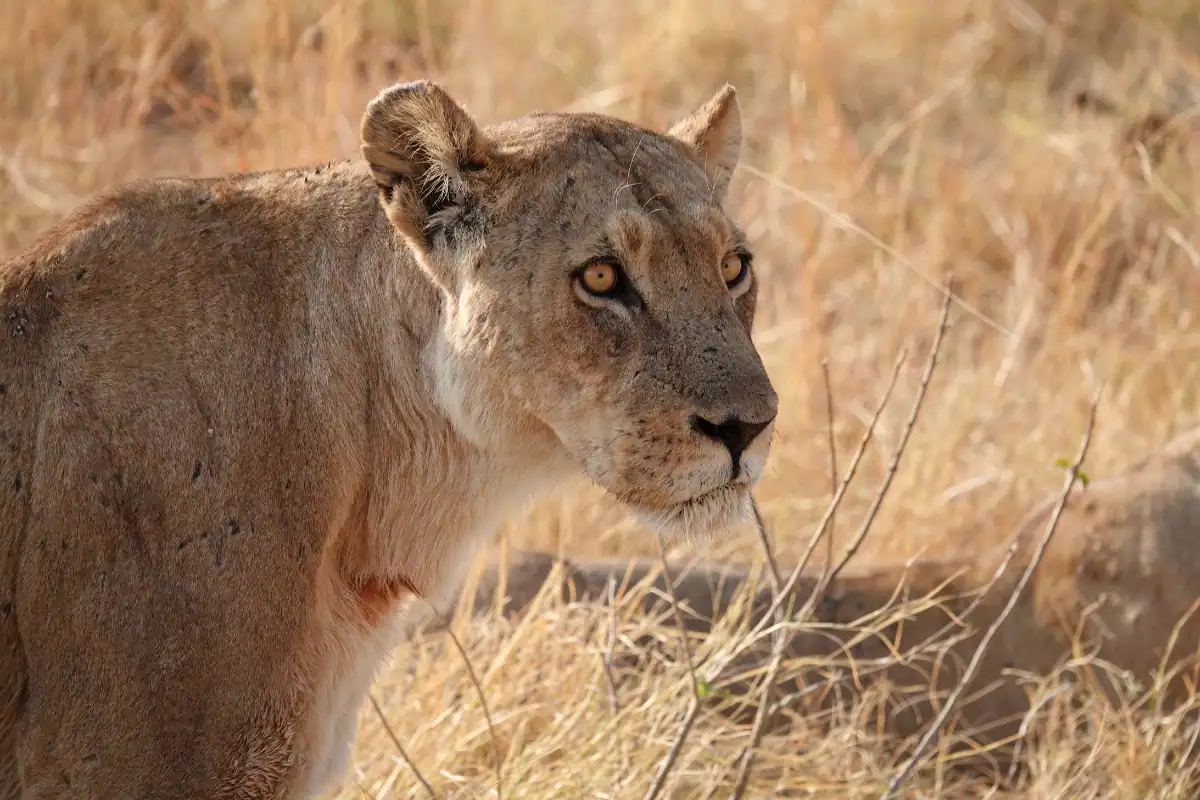
This means guests can easily see the animals around permanent water holes. Additionally, you will be able to see the much-loved Okavango giant swamp lions.
Map of Okavango Delta camps
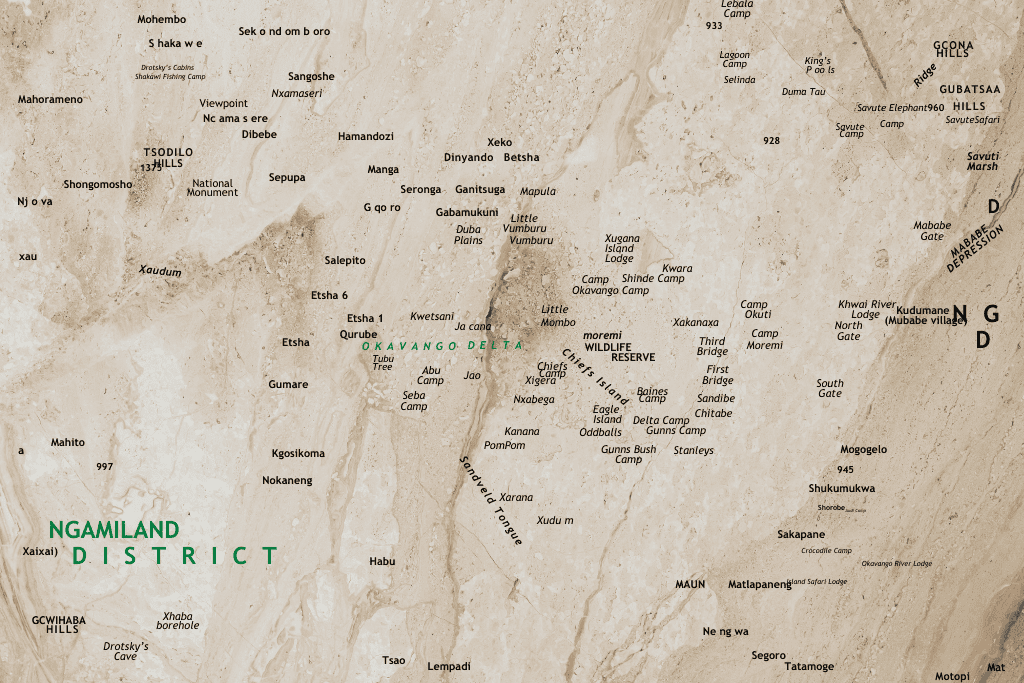
Here are stunning Okavango Delta lodges, because if you don’t know where these safari camps are, you might find it challenging to curate an efficient Okavango safari itinerary.
Additionally, I think seeing the camps on paper helps the whole thing come together and lets you plan your Okavango Delta safari accordingly.
Best safari lodges on the map
The Okavango Delta is home to Botswana’s ultra-luxury camps.
The most luxurious and expensive lodges are on Chief’s Island, such as Little Mombo, Chief’s Camp, and Xigera.
Wildlife hotspot on the map
The Okavango Delta itself is Botswana’s ultimate tourism attraction; no matter where you are in the delta, you will have a blast.
If you look closely at the map, you will see that the famous wildlife areas are there, such as Moremi Game Reserve and Chief’s Island.
These areas are exceptionally rich in wildlife, especially African predators. Additionally, it is a fantastic place for water-based activities, including fishing.
Overall, the Okavango Delta is hands down the best place to go on safari in Botswana. Needless to say, it is my cherished safari destination.