
This post may contain affiliate links. View the disclosure for more information.
Giraffes: graceful and majestic! These towering beasts are a beauty to behold. Although they are not as famous as the African predators, they are just as remarkable.
In this article, I cover everything you need to know about these gentle giants.
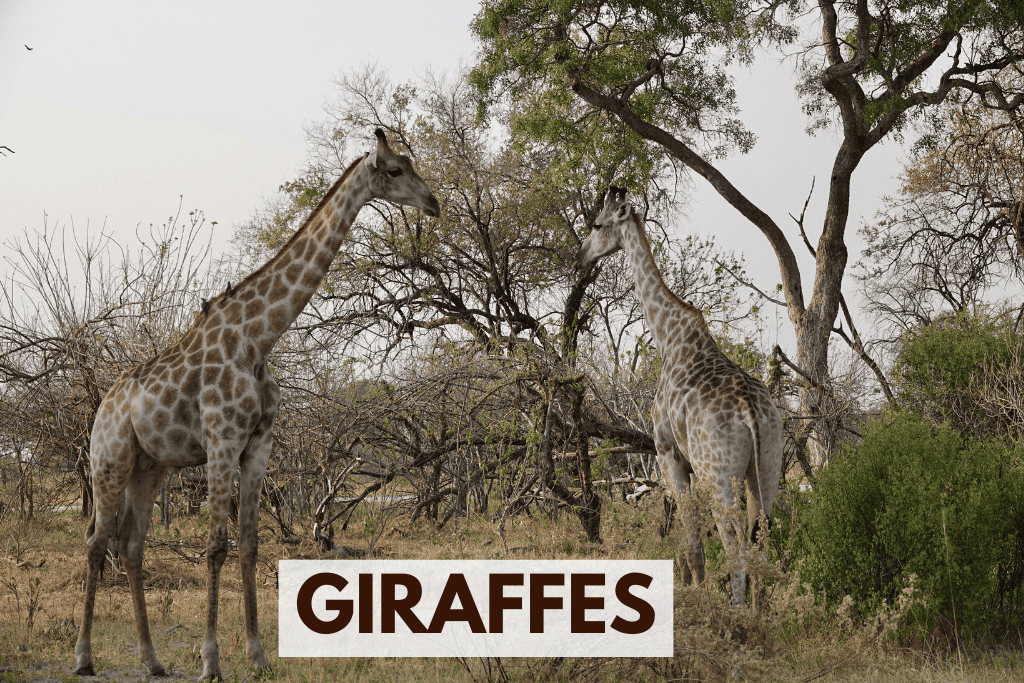
If you adore giraffes like me and are planning an African safari, you are probably doing all the research you can on them, especially trying to find out whether you will see giraffes on your safari.
In this article, you are going to learn everything about giraffes, including giraffe height, giraffe species, and more.
Additionally, we will answer burning questions like “What do giraffes eat?” “Where do giraffes live?”, and more.
After learning this, you will have a better understanding and appreciation of these graceful animals, and hopefully add them to the list of animals you want to see on your safari.
This post is all about Giraffes.
Giraffe Species
You’d think that giraffes have only one species, I did, until I started doing more research about them. They look too similar; however, they are more diverse and complicated than that.
Here are the four main giraffe species in Africa, each with its own subspecies.
Reticulated Giraffe
These giraffe species are among the threatened, with just under 21000 remaining in the wild; however, conservation efforts are showing great results in recovering their declining populations.
You can find Reticulated giraffes in Kenya, particularly in the Northern and Northeastern Kenya, and they are considered the most stunning type.
With the bold white contours that elevate their rich reddish brown colour, you can easily tell why they are considered to be the most beautiful species.
Unlike the Northern giraffe, the patches cover their whole body, including lower limbs and face
Southern giraffe
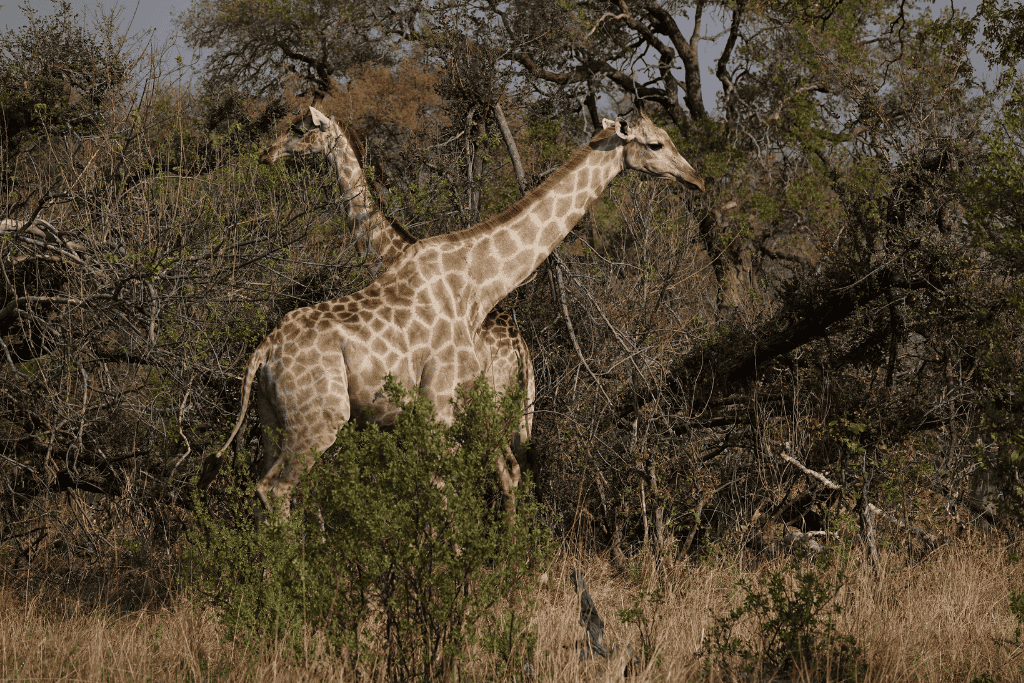
This giraffe species is found in Southern Africa and is the most abundant in the wild, with around 68,000 individuals. These make up almost half of the giraffe population in Africa.
The two subspecies of the Southern giraffe are the Angolan giraffe and the South African giraffe.
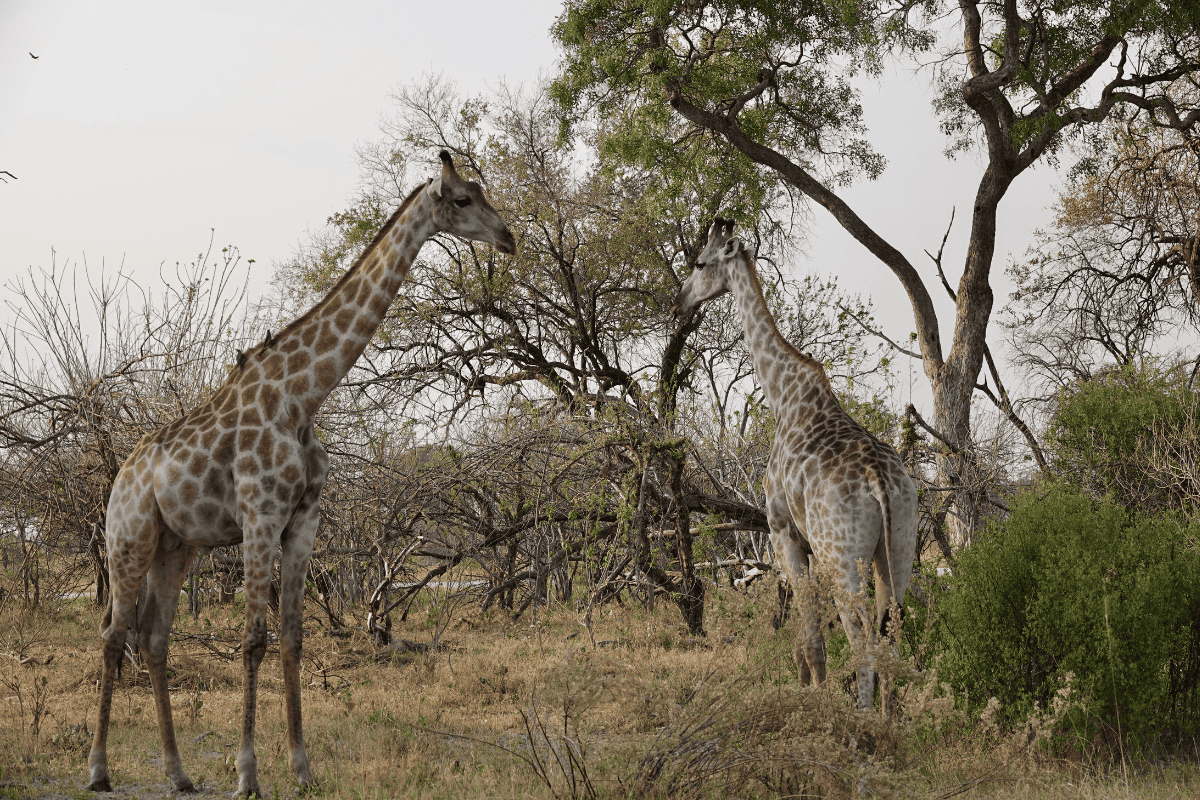
You might ask, “Will I be able to see giraffes in Botswana? ” With these healthy populations, absolutely yes!! However, like I always say, the time you visit matters a great deal.
If you are heading to the Okavango Delta, these will be the kind of majestic beauties you’ll have the pleasure of seeing.
To identify them, their patches are large and irregularly shaped with varied shades of brown. Their lower legs will have some random, uneven spots.
Masai Giraffe
Tanzania and Central and Southern Kenya were once teeming with Masai giraffes, but their population has sadly declined drastically.
Today, there are only about 44,000 of these majestic creatures remaining in the wild. However, giraffe conservation efforts are showing promising results.
To identify the Masai giraffe, look at their colour; they are darker than that of other species. Their patches, shaped like a vine leaf, are larger and dark brown.
Northern Giraffe
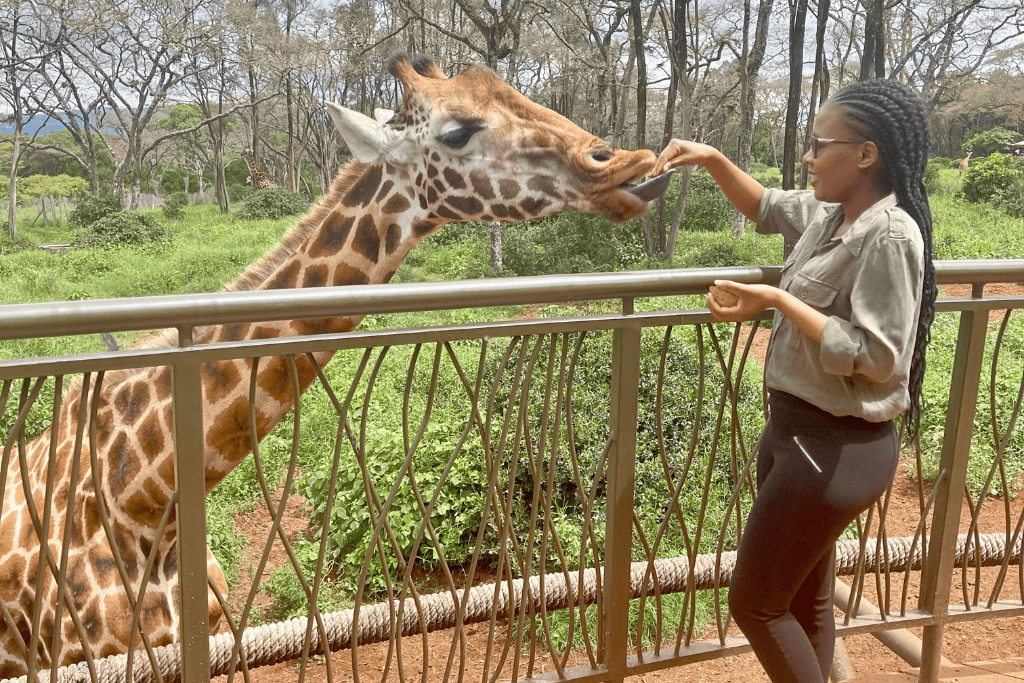
This species of giraffe is found in West, Central, and Eastern Africa. Its subspecies include the Kordofan giraffe, the Nubian giraffe, and the Rothschild’s giraffe.
With only around 7,000 of them remaining in the wild, Northern giraffes are among the most endangered species.
You might be wondering, ‘How do I identify a northern giraffe?’
Well, the easiest way to identify the northern giraffe is by the absence of spots or patches on its lower legs, which are commonly described as white socks.
Additionally, if you look closely, the patches are rectangular, reddish-brown in colour and surrounded by a milky colour.
Are Giraffes endangered?
Yes, but not all species. As I mentioned above, some giraffe species are more threatened than others. The giraffe population has declined sharply over the years, with only about 140,000 giraffes remaining.
To put this into perspective, historically, there were over a million giraffes roaming the African continent freely, and today only 140 000 remain.
In fact, three of the four species we discussed above are seriously threatened.
Giraffe life cycle
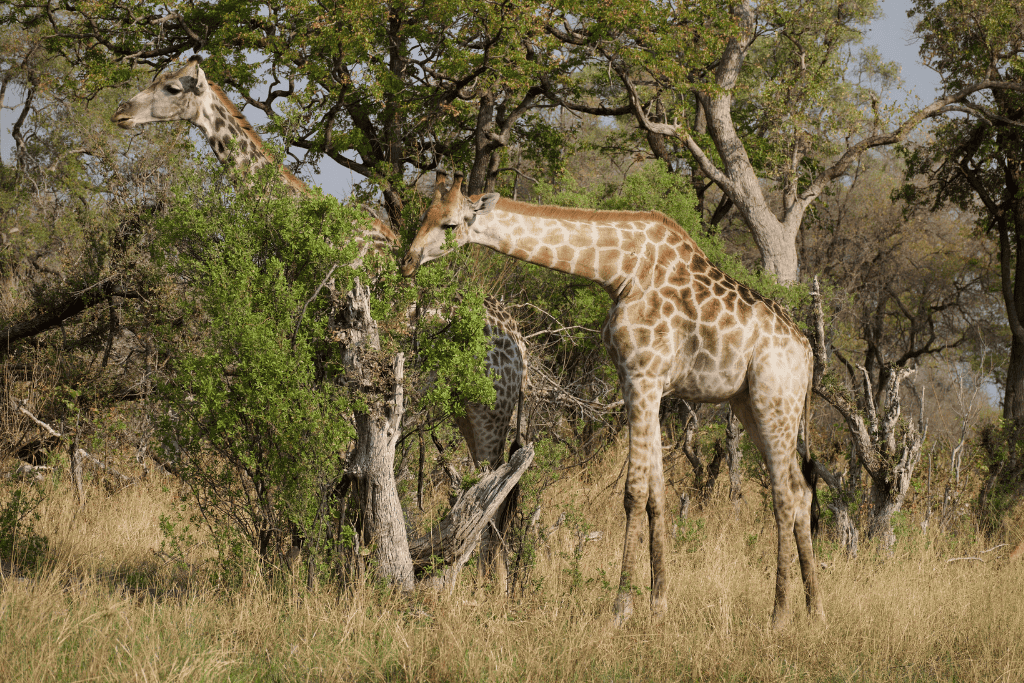
The giraffe’s life cycle is as unique as they are, from birth to the sky-scraping wild beauties of the African savannah.
Pregnancy and birth
A pregnancy of a giraffe is 15 months, with at least a two-year interval between pregnancies.
As I mentioned, giraffes are unique: they give birth standing up, and baby giraffes are up and walking within an hour.
Giraffe calf stage(0-1 year)
From 0 to 1 year, this is the most vulnerable stage in a giraffe’s life because, in the wild, the weak and young are seen as easy prey.
At this stage, the baby giraffe relies heavily on its mother’s milk. As it continues to grow, it starts to browse.
Juvenile stage(1 to 4 years)
At the juvenile stage, the giraffe starts to gain more independence, and the odds of survival improve significantly. Additionally, they grow significantly at this stage.
Furthermore, during this stage, young giraffes separate from their mothers; males tend to do so earlier and wander farther than females.
Adulthood
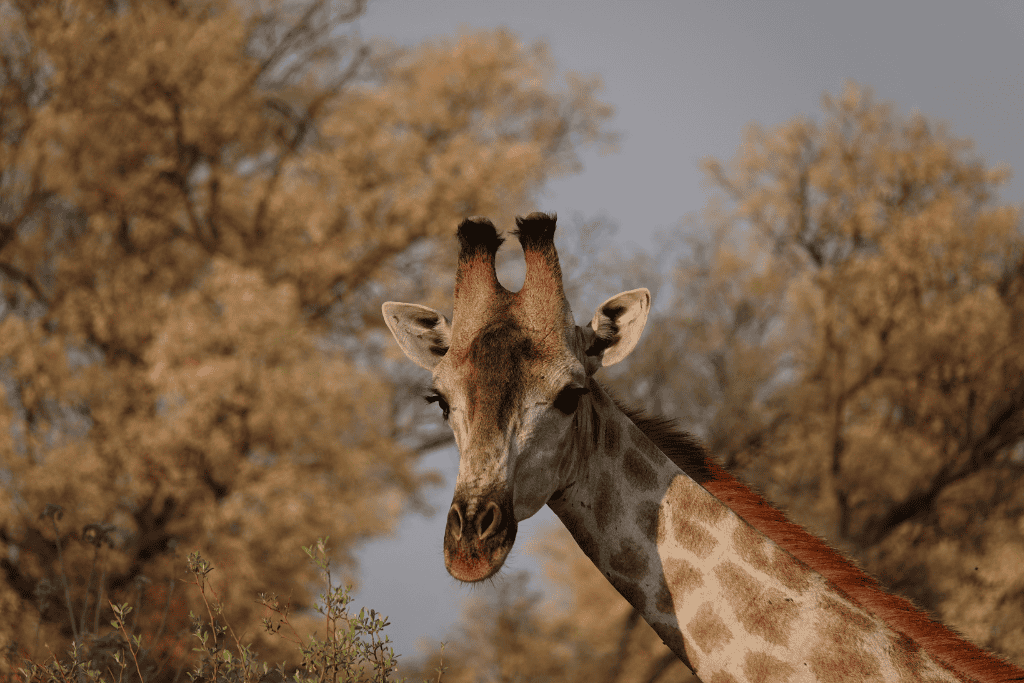
Male and female giraffes reach maturity at different ages. Females, for example, mature much earlier, at 4-5 years, whereas males reach maturity around 7-10 years.
At this stage, the female becomes pregnant and continues the life cycle.
Old age(20-30 years)
In their golden years, the giraffes are fully experienced; they have survived and adapted. They may move more slowly, but they are still remarkable.
To spot the aged giraffe, look for its patches, which get much darker, and the giraffe itself will look worn out. Additionally, you can sometimes spot some bald spots on the ossicones.
Furthermore, as social as they are, they start to prioritise unity even more as they age.
What are the threats to giraffes?
Humans! People are the number one threat to giraffes, along with environmental changes and natural predators like lions.
Human-giraffe conflict is very rare, so the main way humans pose a threat to giraffes is through poaching.
Giraffes size
Giraffe height
How tall are giraffes? You might ask, “Well, a male giraffe can reach a height of 14 to 19 feet (4.3-5.8 metres), whereas a female can reach up to 14 feet (4.3 metres).”
Moreover, the giraffe’s iconic neck can reach up to two metres long.
It’s no surprise that people know giraffes for their tall stature; giraffes are, in fact, the tallest living mammal in the world.
Giraffe weight
A male giraffe can weigh around 1600kg(3500 lbs), whereas a female giraffe weighs around 830kg(1800lbs).
Newborns weigh around 80 kg and are able to stand and walk within an hour of birth.
Where do giraffes live?
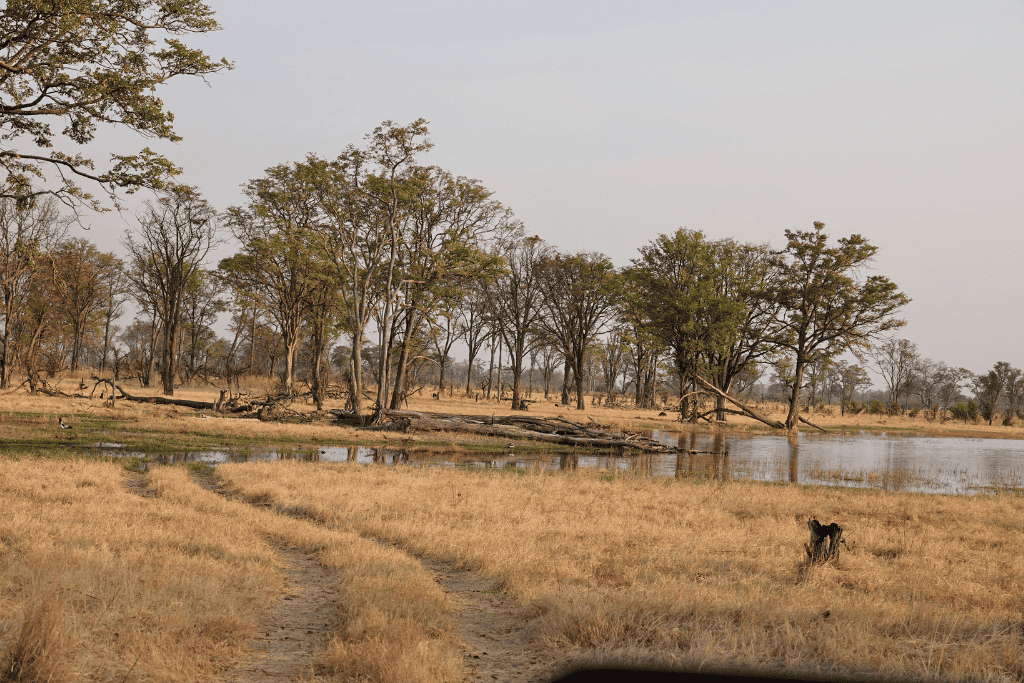
These graceful and majestic animals live in the wild across Africa, predominantly in open woodlands, grasslands and savannahs.
For example, the Botswana Okavango Delta is a great place to find giraffes because of its vast, diverse biome, which is perfect for these tall creatures to thrive.
Most giraffes can be found in National Parks across Africa; however, giraffes have gone extinct in 7 African countries. So sad!!
Because of their towering stature, giraffes struggle to find shelter when needed, such as during storms. They just stand there in the open and endure.
I recently saw a video of a giraffe during a harsh storm somewhere in Africa; the poor thing was standing in the open, with nowhere else to go.
What do giraffes eat?
Giraffes are herbivores, feeding on leaves from trees and shrubs. Although acacia leaves have a special place in their diet, they can also feed on vines, flowers, shrubs and fruits.
They do eat grass, but only in small quantities, depending on food availability. Giraffes are highly adaptable and can easily adjust their diet depending on the seasons and availability.
During the dry season, when food availability is limited, giraffes spend most of their days browsing, with feeding accounting for up to 75% of their day.
Although they are large, they are much gentler on the environment when feeding, unlike elephants, which are so destructive to their environment. You gotta love giraffes!
Not only that, giraffes play a crucial role in their environment by eating seeds and excreting them as they drop their pellets, thereby promoting seed germination.
Additionally, they help in pollination by transporting pollen as they feed between trees.
Their height allows them to reach flowers way high up in trees that insects might otherwise not be able to reach, making them very important pollinators.
How long do giraffes live?
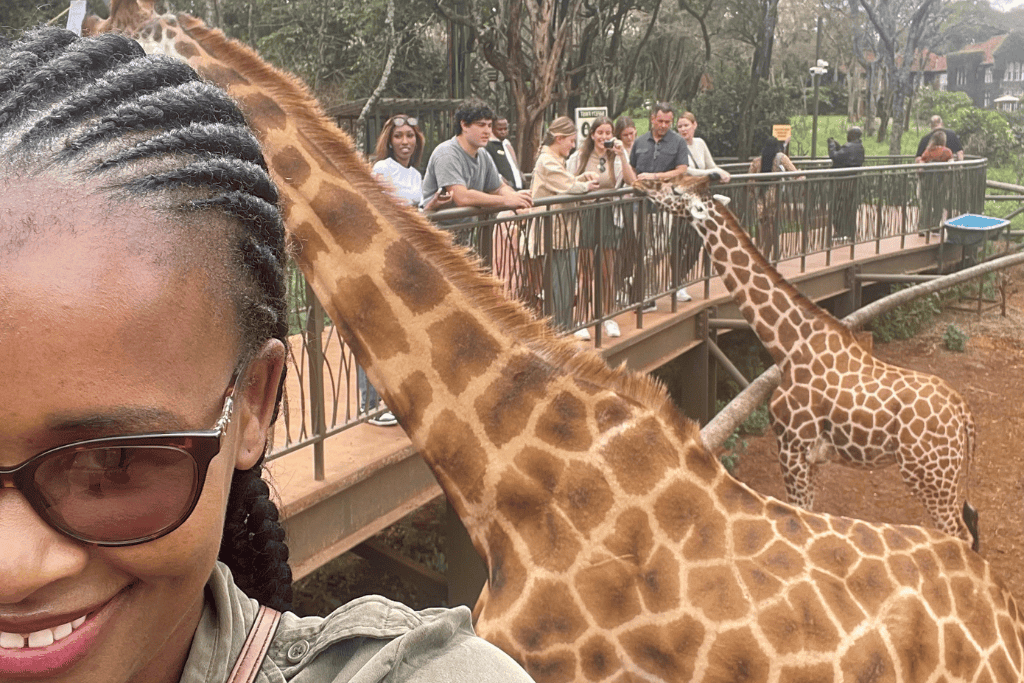
Wondering, ‘How old do giraffes live?’ Well, it depends on where they are living.
The lifespan of giraffes is approximately 25 years in the wild. However, research has shown that giraffes in the wild can live much longer than that.
This is because, in the wild, bigger is better, and giraffes are large and intimidating in height.
However, giraffes are said to live longer in captivity, a.k.a zoos and protected environments, up to 30 years. This is mainly because they are shielded from predators in the wild.
But make no mistake, they are very capable of putting up a fight in the wild, with the most powerful, fatal kicks you can come across in the African wilderness.
Giraffe sleep
Giraffe sleep is the most unusual, and giraffe sleep time is the shortest in the animal kingdom.
How do giraffes sleep?
Their sleep patterns all boil down to survival because in the wilderness, sleep can be fatal.
Because of that, giraffes have mastered the skill of sleeping standing up, eyes not fully closed, ears fluttering.
Although researchers once thought giraffes slept standing most of the time, recent studies have shown that they, in fact, lie down to sleep more often.
When lying down, they fold their legs and tuck them under their bodies, often keeping their necks upright. However, they sometimes use their own rumps as their pillow.
How long do giraffes sleep?
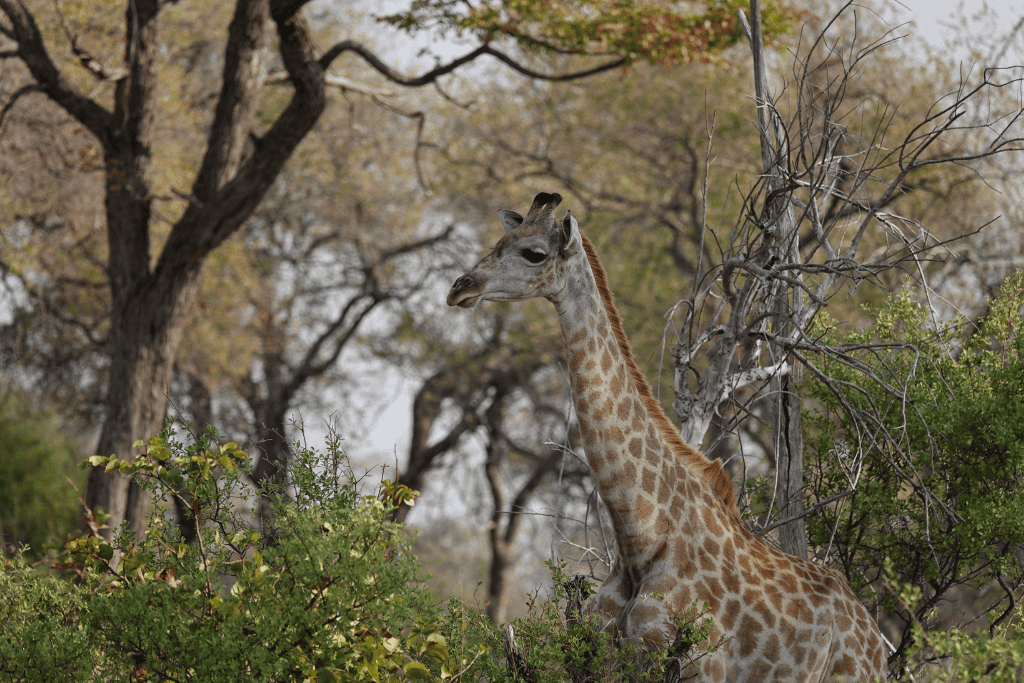
Giraffes have the least amount of sleep in the animal kingdom. They sleep for about 30 minutes a day, because sleep is so expensive in the wilderness.
They don’t sleep more than five minutes, especially when lying down, because trying to get up quickly in the event of an ambush is a whole ordeal for a giraffe.
Furthermore, lying down makes the giraffe highly vulnerable and exposed to predators, as its neck is low enough for ambush predators to deliver a fatal attack.
Are giraffes related to camels?
Giraffe and camels are distantly related; they share a very, very ancient common ancestor.
Giraffes and camels, as large mammals, belong to a group of mammals called artiodactyls, which includes deer, cows, and hippopotamuses.
As evolution continued, they split into very different branches. Giraffes belong to the Giraffidae family, whereas camels belong to a different family called Camelidae.
You might ask, What is the closest relative to the giraffe? The Okapi (Okapia johnstoni) is the closest relative to the giraffe, although it is much smaller and has a much shorter neck.
Do giraffes make noise?
As a safari enthusiast who loves giraffes, I have never heard a giraffe make any type of noise. Ever!
However, researchers have discovered that giraffes do make noise, but the sounds they make are so low-pitched that humans can easily miss them.
They make low humming sounds, especially at night, according to research.
Giraffe facts
Giraffes tongue
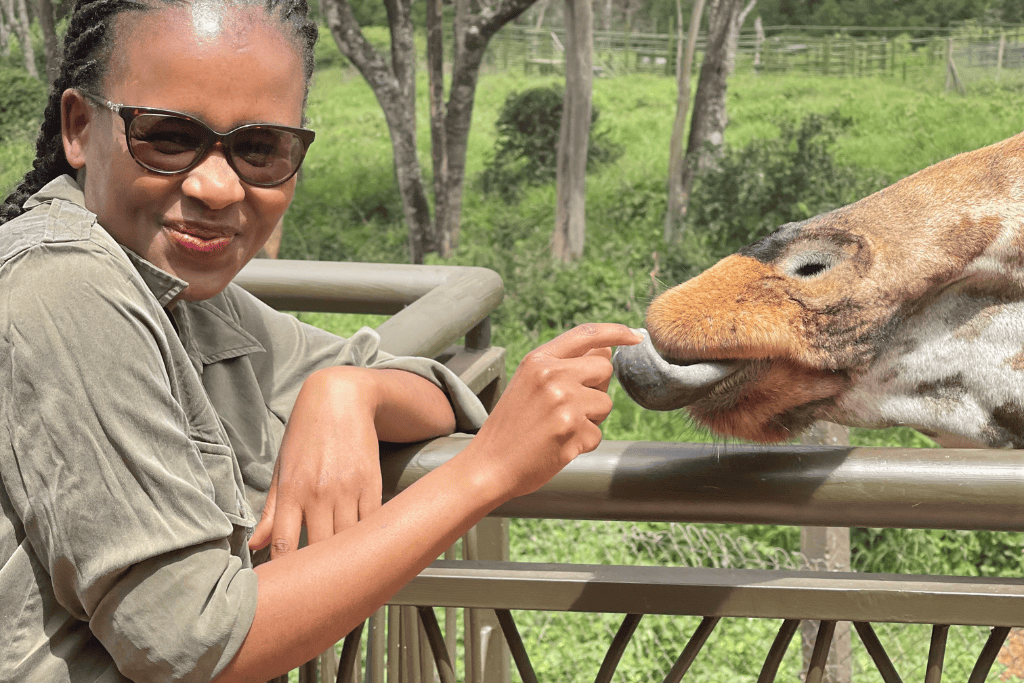
The giraffe’s tongue is about 50 cm long. Giraffe tongue colour is dark purple or bluish-black.
Their long, muscular, flexible tongues help them to meticulously select nutritious leaves from thorny trees and shrubs.
They can easily wrap their tongues around things, making feeding so much easier.
Not only that, these impressive creatures can even clean their ears using their very own tongues, and it is the only animal that can do that.
Giraffe Heart
Giraffe heart weight is approximately 11 kg; unlike other mammals, the left side of the heart has a much thicker muscle.
This is crucial for giving the heart enough force to pump blood throughout the giraffe’s extremely tall body.
Giraffes cardiovascular adaptation
Because of giraffes’ towering stature, these graceful animals have developed impressive adaptations in their cardiovascular system.
Their blood vessels are muscular and thick, with the skin on the legs so tight that it acts like a compression stocking, helping force blood back to the more important organs like the heart and brain.
Giraffe birth
Giraffes give birth standing up, with their newborn dropping from a height of about 2 meters during delivery. In an hour, the newborn calf will be standing and walking.
Giraffe drinking water
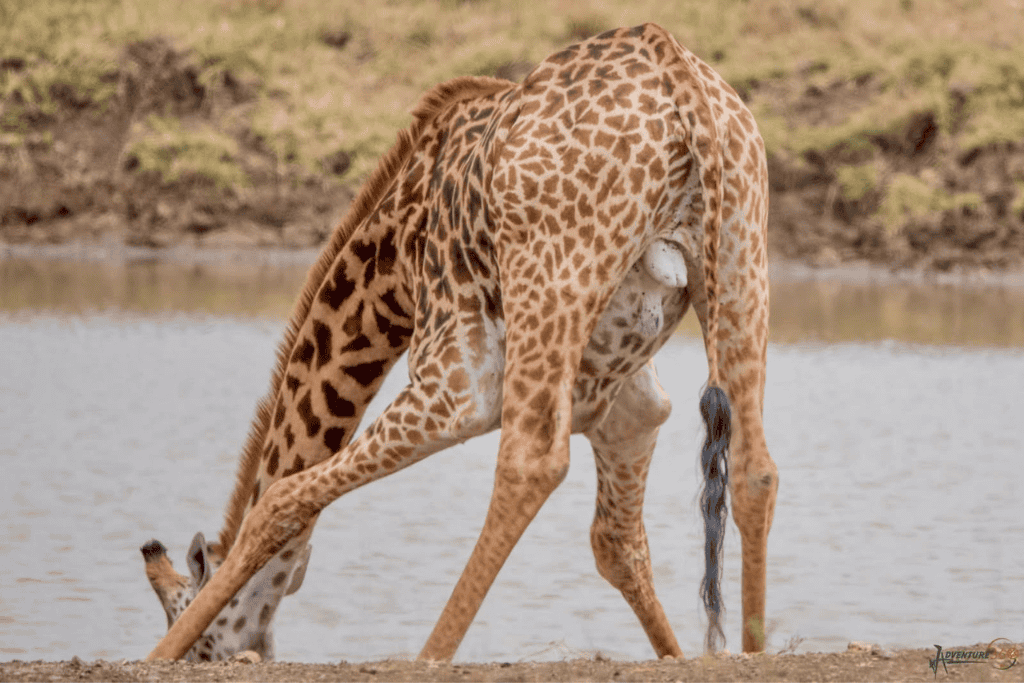
Giraffes can live on very little water; they drink only once every few days, even when water is readily available.
Additionally, drinking water is challenging for them because their necks are too short to reach the ground; therefore, they have to spread their front legs wide and bend their knees.
In addition, this position leaves them vulnerable. I get why they don’t drink unless it’s an absolute must.
Giraffe coat pattern
Similar to human fingerprints, giraffe coat patterns are unique to each and every single giraffe. No two are exactly the same!
Giraffe feet
Giraffe feet, known as hooves, are very large, with a diameter of about 30cm (12 inches). They are hard and thick.
Although built to support the giraffe’s weight and stature, these feet serve a more sinister purpose: A single kick can break a lion’s skull, killing it almost instantly.
Giraffe horns
What you and I may call ‘giraffe’s horns’ is actually called ossicones. Both males and females are born with them.
However, these cartilage projections are initially not attached to the skull and are flat at birth, which is helpful during birth, as this prevents injury.
As the giraffe grows, the cartilage attaches to the skull and ossifies, becoming bone.
Giraffe habitat
As I mentioned above, you can find giraffes across Africa, mainly in the dry savannahs, where they seem to thrive.
The most giraffes I have seen were in the Khwai region of the Okavango Delta in Botswana, an open savannah environment perfect for these herbivores to flourish.
However, researchers estimate that about 80% of the giraffes’ habitat has been lost since the 1700s.
Best places to see giraffes
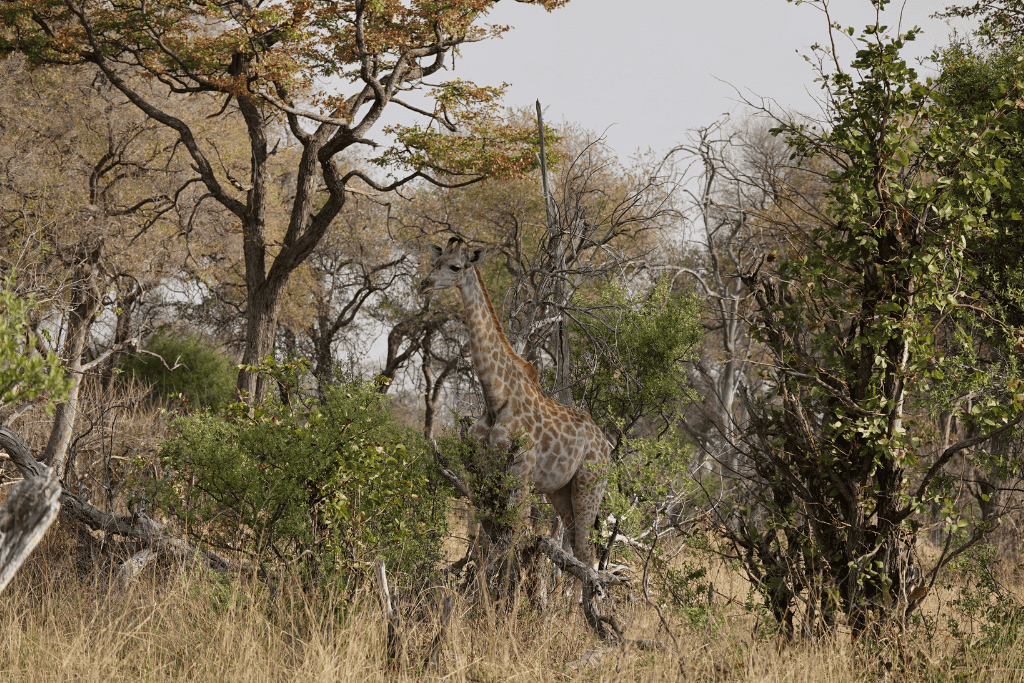
If you landed on this article, I understand you might be looking for the best places to see these beautiful creatures in person.
Here are the best places to see these magnificent, elegant animals.
Botswana(Okavango Delta)
This is one of the richest wildlife areas in Africa, and giraffes roam the delta in abundance.
Keeping in mind that the southern giraffes are the most populous giraffe species in the world.
There are several Okavango safari packages that will ensure you see these gracious animals, among other wildlife, in Botswana.
Kenya(Masai Mara) and Tanzania(Serengeti)
Another great place to see giraffes in their natural habitat is the iconic Masai Mara. With its stunning landscape and excellent wildlife sightings all year round, you will not regret taking that trip.
I was impressed by the wildlife in the Masai Mara, and, of course, the abundance of giraffes. I travelled in early May.
For the ultimate giraffe safari, I highly recommend the Masai Mara Serengeti package, which takes you to the legendary safari destination in East Africa.
Additionally, the package includes Nairobi, where you can feed Rothschild giraffes at the Kenya Giraffe Centre.
South Africa(Kruger National Park)
This is a highly accessible national park with a healthy giraffe population.
The best thing about these places is that not only will you see giraffes, but you will also see a variety of African wildlife, including the Big 5.
A Kruger National Park safari package is the best and most comprehensive way to explore South Africa.
Namibia(Etosha National Park)
The giraffe species found here is the Angolan species. Because the park’s landscape is flat, open terrain, it is much easier to spot giraffes and get an excellent view.
Uganda(Murchison Falls National Park)
This national park is home to the largest population of the endangered Rothschild’s giraffe.
I recommend considering a Uganda safari package to get the most out of your African safari.